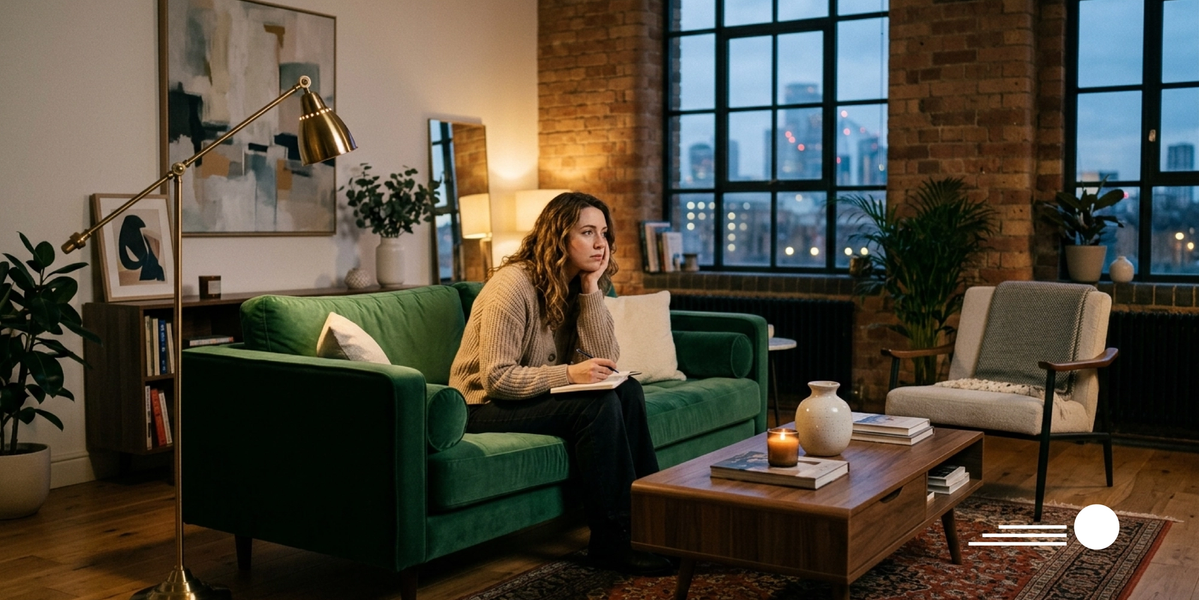
Why Does My Room Feel Empty? It's Not the Furniture — It's the Light
You've done everything right. The fridge, sofa and artwork sits perfect in the right place — at least Pinterest pins gave you enough insight to creating a beautiful moodboard. Every piece in the room is intentional.
And yet the room still feels... empty. Not empty like it lacks stuff — empty like it lacks soul. You keep buying things to fix it. A new throw pillow. A different plant. Another side table. The feeling doesn't move.
Here's the answer, plainly: your room isn't missing furniture. It's missing layered light.
Most rooms only have one type of lighting — ambient, the general "everything is switched on" glow from the ceiling. When every surface in a room receives the exact same flat light, your eyes have nowhere to land. Nothing is emphasized, nothing recedes, nothing feels considered. Your brain reads that evenness as "unfinished," even when the furniture is perfect.
The fix is what lighting designers call layering: combining ambient light with task light (light that serves a function — a pendant over a dining table, a spotlight on a counter) and accent light (light that exists purely to create mood — a wall wash, a profile light grazing a textured surface). Rooms that feel expensive almost always have all three. Rooms that feel empty almost always have just the first.
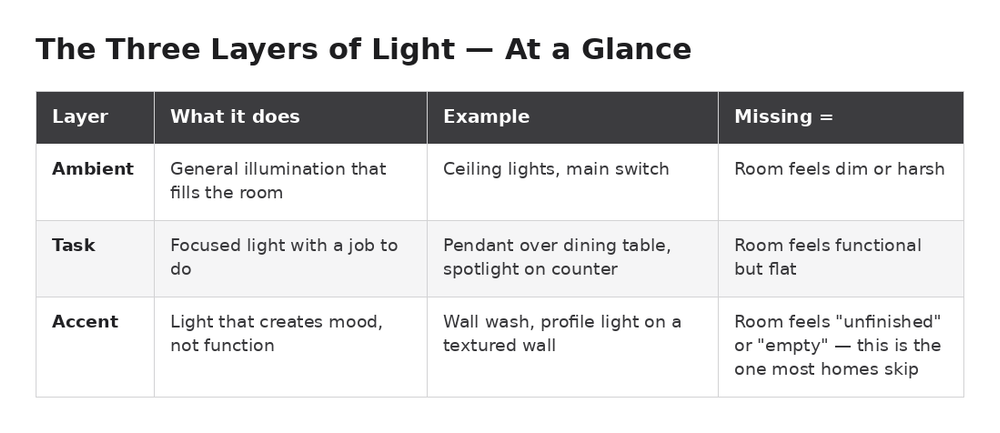
The Three Layers of Light (At a Glance)
- Ambient — General illumination that fills the room
Example: Ceiling lights, main switch
Missing: Room feels dim or harsh - Task — Focused light with a job to do
Example: Pendant over dining table, spotlight on counter
Missing: Room feels functional but flat - Accent — Light that creates mood, not function
Example: Wall wash, profile light on a textured wall
Missing: Room feels "unfinished" or "empty" — this is the one most homes skip
Why This Actually Works (Not Just Design Talk)
Human brains are wired for contrast. A room with light and shadow signals enclosure, safety, warmth — the same reason a candlelit corner feels more inviting than a fluorescent-lit one, even though the fluorescent one is objectively brighter. Flat, all-over lighting mimics outdoor noon light: exposed, directionless, draining. It's why the most expensive-feeling hotel lobbies and restaurants almost never rely on one overhead source — they build with low, localized light instead, and something about it just feels right — even if you can't say why.
A Quick Self-Check
Stand in the middle of your room in the evening with only your main light on, then ask yourself:
- If I turn this one light off, is the room in complete darkness?
- Are all my lights switched on from just one spot?
- Is there any corner of this room that just glows, without me needing to see everything in it?
If you answered "yes, yes, no" — that's your gap. And unlike a new sofa, it's a fixable one.
Where to Start: Small Additions, Big Shift
You don't need to rewire your whole home to feel this shift. Start small:
- A profile light along one shelf or under a cabinet — instantly makes a space feel "designed" rather than just furnished.
- A wall light in a reading corner or hallway — creates a warm bloom that draws the eye and defines the space.
- A pendant light over your dining table — makes the table feel like the centre of the room, not just a surface.
None of these replace your existing lighting. They sit alongside it — the layer most Nigerian homes skip entirely, because "light" usually means "can I see," not "does this feel like somewhere I want to stay."
Your furniture was never the problem. Once the light is layered, the same sofa, the same rug, the same artwork — suddenly all of it looks like it belongs.